The Boy from Battersea
The voyage of thirteen-year-old Vernon Wood on the SS Dominion (July 1903) and the century-long genesis of the wire.
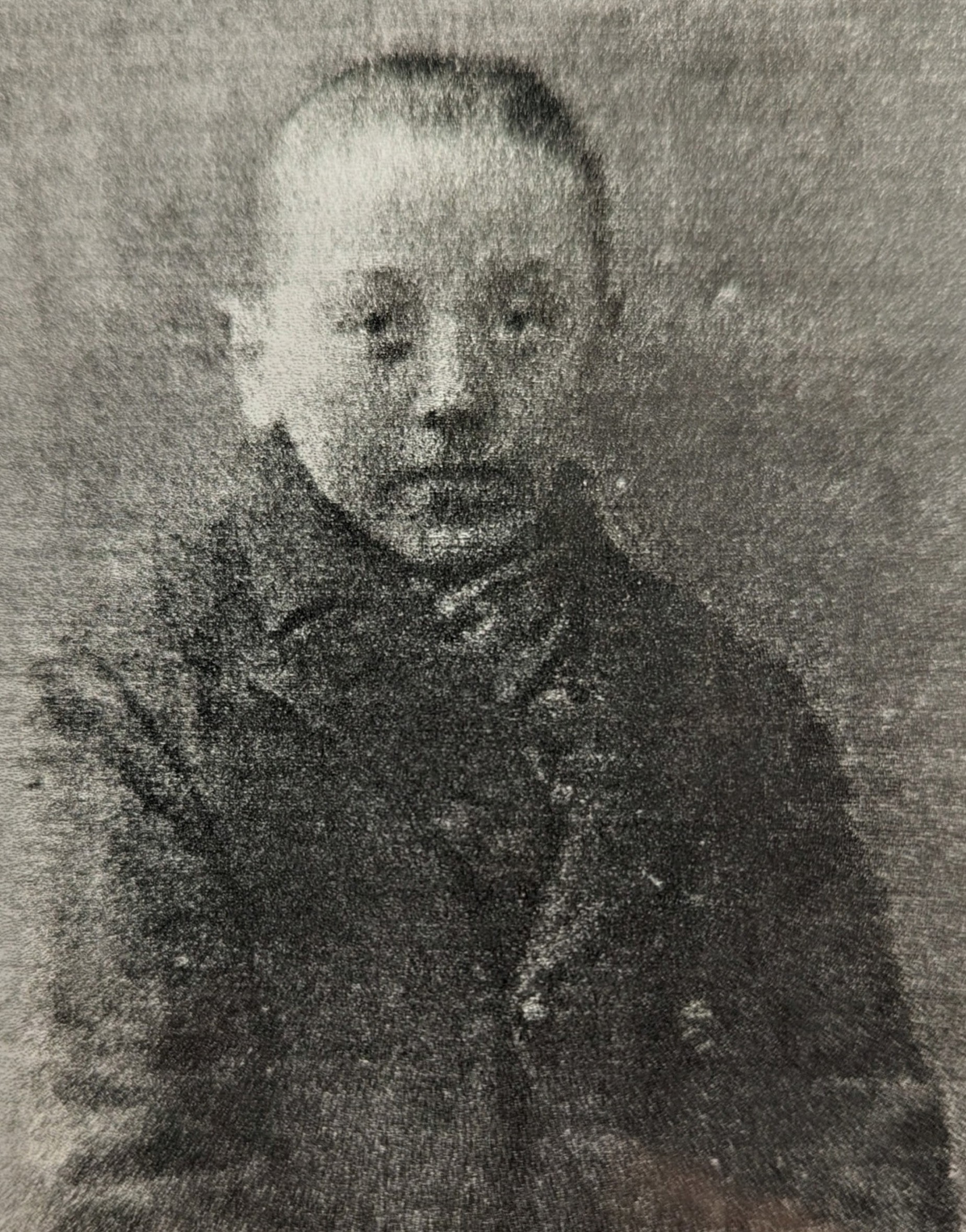
When I looked into the eyes of this boy for the first time, a profound, unexplainable sadness welled up from somewhere deep within me. It felt like a sorrow without reason—until I recognized that it was not mine alone. It was his. And it had been waiting over one hundred and twenty years to be felt, honored, and understood.
Imagine being thirteen years old in July 1903.
Your father, once a respected waiter in the dining rooms of London, has fallen into the grip of alcohol. Your home has shattered. Your mother, exhausted by hardship, has been forced into institutional care. You are admitted to Dr. Barnardo’s Home in Epsom. One afternoon, your mother Susan Ada visits you in the parlour to say goodbye. Neither of you know it then, but it will be the last time in your mortal life that you will ever feel her touch or hear her voice.
Days later, on July 15, 1903, you are marched up the wooden gangplank of the SS Dominion. You clutch a single small trunk, turn toward the rail, and watch the grey shores of England dissolve into the North Atlantic fog. You are a British Home Child—one of more than one hundred thousand children sent into the vast Canadian dominion to forge a future out of exile.
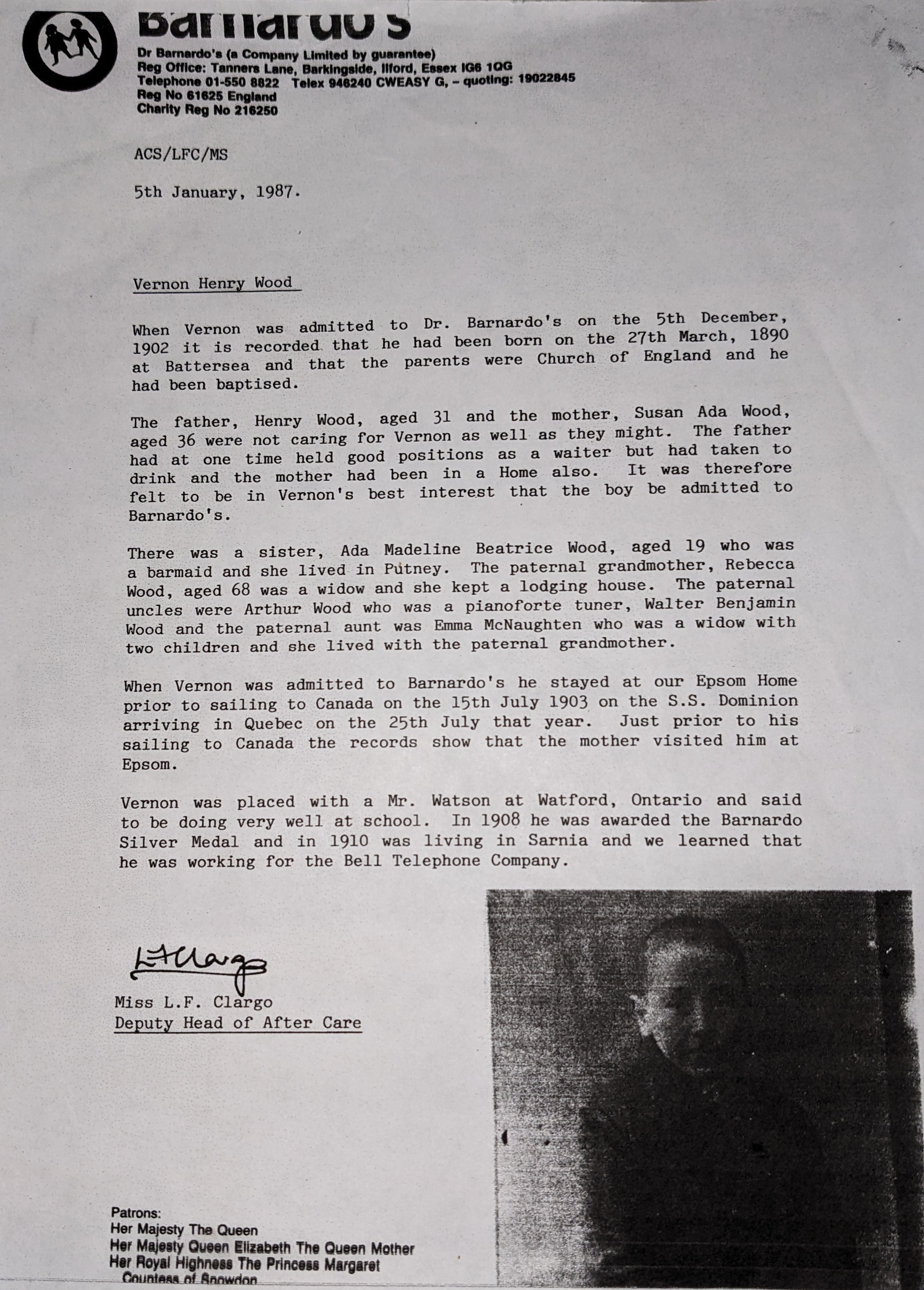
The Official Dr. Barnardo’s Archive Letter“When Vernon was admitted to Dr. Barnardo's on the 5th December 1902, it is recorded that he had been born on the 27th March 1890 at Battersea, and that the parents were Church of England and he had been baptized.
The father, Henry Wood, aged 31, and the mother, Susan Ada Wood, aged 36, were not caring for Vernon as well as they might. The father had at one time held good positions as a waiter but had taken to drink, and the mother had been in a home also. It was therefore felt to be in Vernon's best interest that the boy be admitted to Barnardo's.
When Vernon was admitted to Barnardo's, he stayed at our Epsom home prior to sailing to Canada on the 15th July 1903 on the SS Dominion, arriving in Quebec on the 25th July that year. Just prior to his sailing to Canada, the records show that the mother visited him at Epsom.
Vernon was placed with a Mr. Watson at Watford, Ontario, and said to be doing very well at school. In 1908, he was awarded the Barnardo Silver Medal, and in 1910 was living in Sarnia, and we learned that he was working for the Bell Telephone Company.”
— Miss L. F. Clargo, Deputy Head of Aftercare (January 5, 1987)
The Genesis of the Wire
That thirteen-year-old boy could not afford the luxury of grief. In the farming fields of Watford, Ontario, he had to be resilient. He rose before dawn, earned top marks in school, and in 1908 received the Barnardo Silver Medal—a rare distinction reserved solely for youth of unyielding moral character and diligence.
By 1910, at age twenty in Sarnia, Vernon strapped climbing spurs to his boots and scaled his first telephone pole for The Bell Telephone Company.
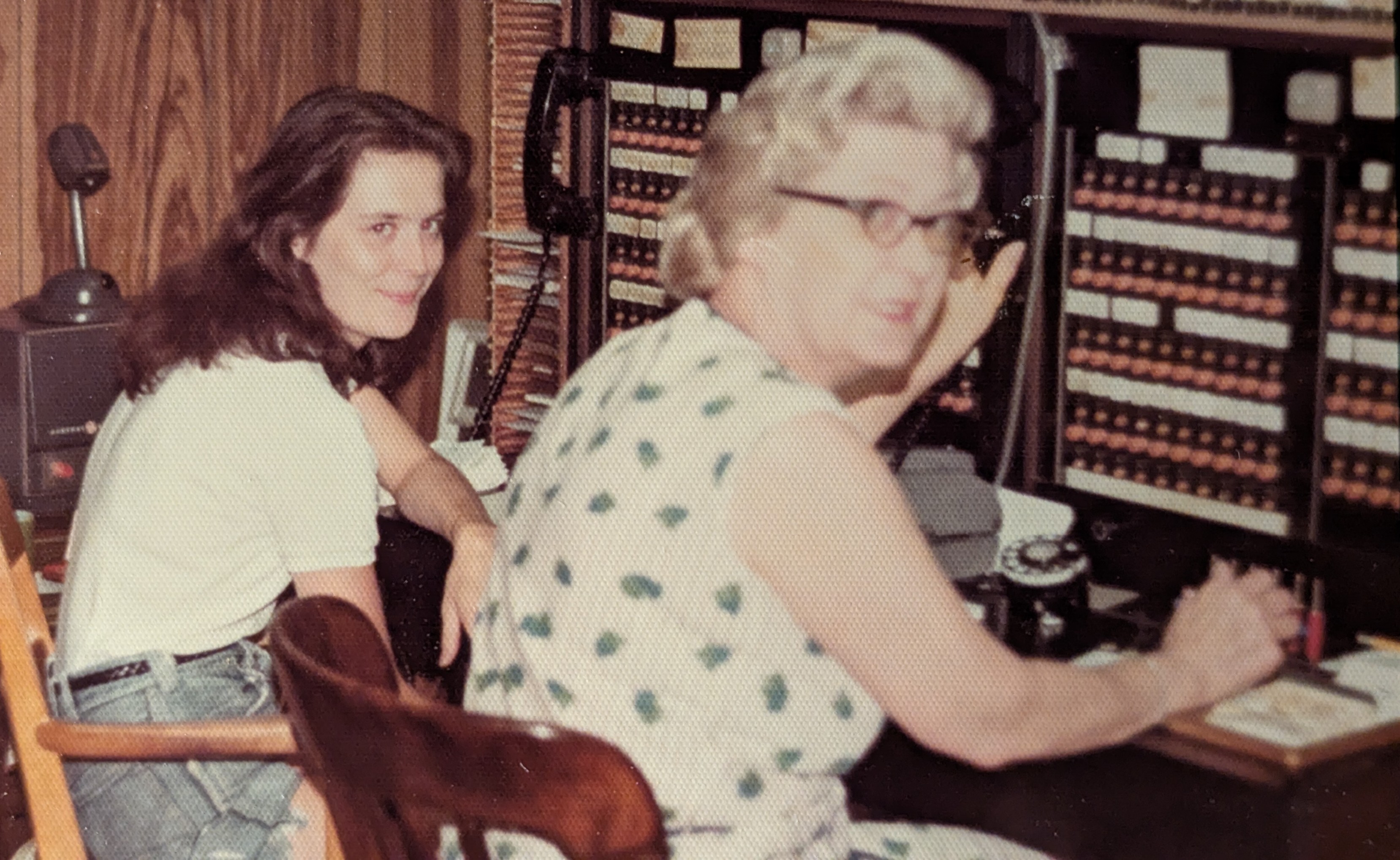
In that moment, an unbroken four-generation dynasty of communications began:
Breaking the Generational Cycle
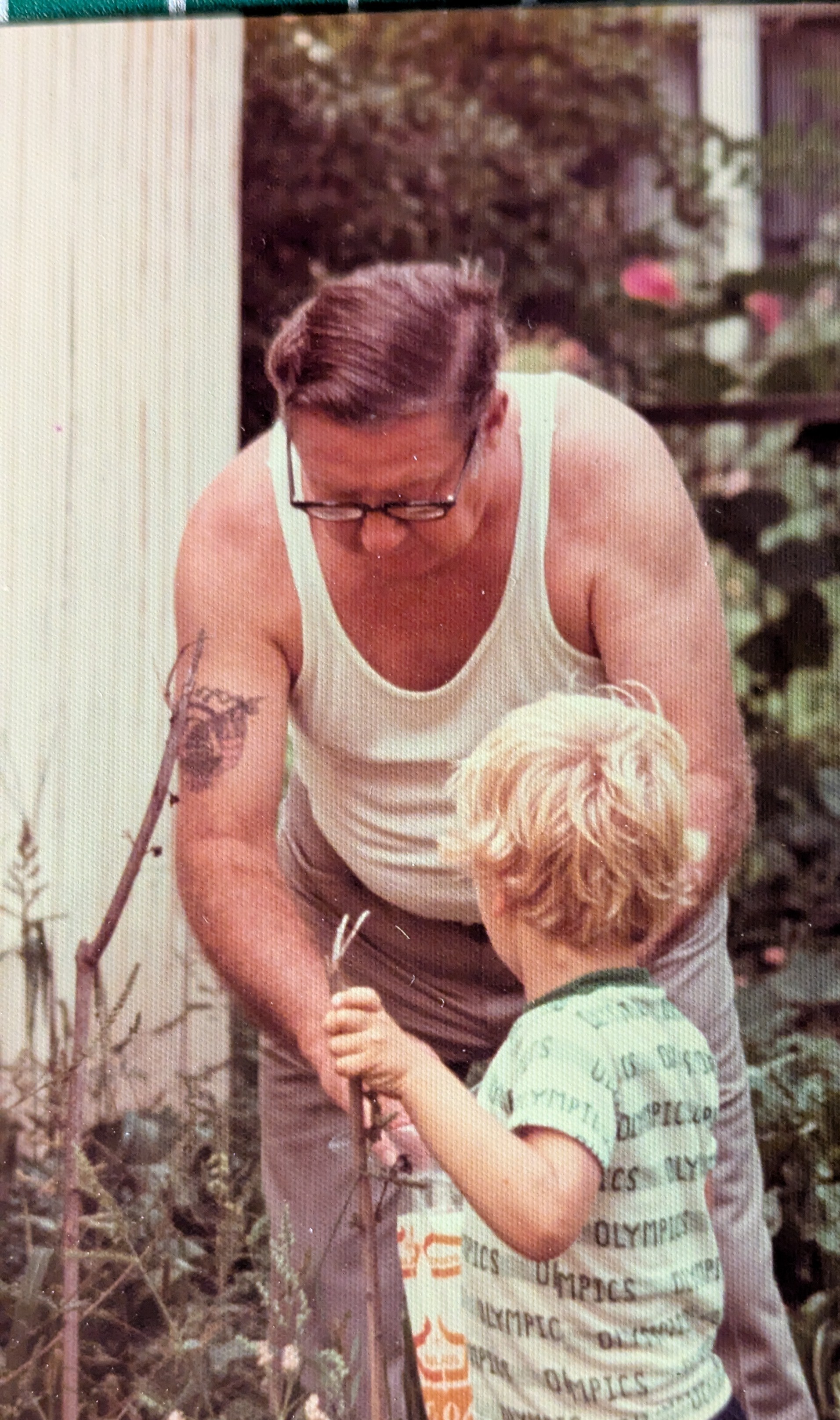
The shadow of alcohol that broke Henry Wood in Victorian London did not disappear overnight. It rippled through the generations, testing each man in turn. But the story does not end in tragedy. It ends in triumph.
On September 11, 2009, I faced that same furnace. Through the grace of God and the name of Yeshua, the cycle was broken. The locked grief of that displaced boy on the SS Dominion has finally found a safe harbor.
Vernon Wood did not cross the Atlantic in vain. Every line of code I author, every system I build, and every story I record stands on the shoulders of the boy from Battersea.